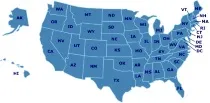
Local & State Resources
local and state resources…
What's Popular
The How To’s of Homeschool Socialization
Is the only place to learn from others found within the four walls of a school? If we follow the logic that socialization only comes from school, are we then to assume socialization does not occur within the family unit, at church, or on any give sports team? How about during neighborhood play or at the local playground? And if we assume socialization is a process occurring throughout our lives then what happens when we are no longer within the four walls of elementary, middle or high school? You socialize a homeschool child, or anyone else for that matter by having them live their lives, be in their environment and around the people you would normally be around during the course of a day.
Is Homeschooling Right for You?
The decision-making process to homeschool a child is daunting. If the child presently attends public school, it’s more intimidating. Many people eagerly voice their opinions on home-based education and at times, the debate is heated. However, according to the National Home Education Research Institute, significant growth has transpired in the past three to five years with the homeschool population in 2010 reaching 2.4 million students. But is it right for you? If you are considering a home-based education for your child, here are a few things to consider as you begin your decision-making process.
Teachers.Net Lesson Bank
The Teachers.Net Lesson Bank is a resource designed to allow teachers to post and/or request specific lesson plans and teaching ideas. These lesson plans cover all sorts of subjects and grade levels. There is a remarkable amount of creativity and resources that can only come from the experience of teachers using these ideas successfully to make learning exciting. Note that because they are posted by individual teachers, there is not a standard format for these lesson plans (some don't have objectives, materials list, etc).
VideoText Interactive
VideoText offers complete courses in algebra and geometry using new, interactive, video-based strategies. Students love the brief lessons and the clear explanations of the concepts.
Christian Homeschooling an Only Child
This is a safe place for Christian families to share their hopes, joys, concerns and prayer requests as they homeschool an only child
Unschooling.com
Provides information and support for those who unschool or who have chosen a relaxed, child-led form of learning. Includes stories from experienced unschoolers, message boards, a free monthly email newsletter, and helpful resources.
Cabin in the Woods
Diane Knect is homeschooling an only child. Share her experiences with raising her daughter Grace in a homeschooling small family.
Homeschoolers at the Public Library: Are Library Services and Policies Keeping Pace?
Homeschoolers are a resourceful, fast-growing segment of the population. Their service, programming, material, and technology needs are similar to those of other patrons of the public library, but uniquely different in terms of intensity and focus. These differences present unique challenges for public libraries. This research presents the results of two surveys that examined the relationship between homeschoolers and the public library. The first survey asked public librarians about the impact of homeschoolers on public libraries in the Capital District of New York State. The second survey asked homeschoolers from the same region about their library use patterns as well as service needs. Homeschoolers were not placing undue service demands on public libraries, and, in fact, appear to be a service area awaiting development. This article is in the Journal of the Library Administration and Management Section of the New York Library Association. Scroll down to page five to find the start of the article.
Miquon Math
Miquon Math is a curriculum for Grades 1-3, developed in the 1960s by Lore Rasmussen at the Miquon School in Pennsylvania. Its hands-on lab approach helps children actively explore math concepts, learning by doing.
It's Time for the PSAT/NMSQT
Although this article has some outdated date information in it, it is a good discussion of the use of the PSAT/NMSQT (Preliminary Scholastic Aptitude Test and National Merit Scholarship Qualifying Test) for homeschoolers, especially those who are interested in qualifying for certain scholarships.