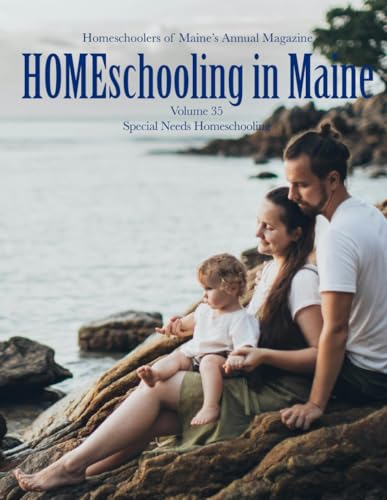
A look at using an unschooling approach with children who are highly sensitive and out of sync.
This group is primarily for blind parents who are interested in alternative parenting styles and issues. This includes atachment parenting, family bed, baby-wearing, gentle disipline, loving guidance, breastfeeding, healthy eating and living, health prevention, nonviolence, nonspanking, unschooling or homeschooling, spirituality, and more.
This policy paper provides a list of questions that parents and parent organizations can address in an effort to ensure that statewide assessment systems fully and fairly include students with disabilities. In the past, students with disabilities have too often been excluded from large-scale assessments. However, students with disabilities now must be included in state assessment programs with appropriate accommodations, as required by the recent amendments to the Individuals with Disabilities Education Act (IDEA), as well as the Americans with Disabilities Act (ADA), and Section 504 of the Rehabilitation Act of 1973.
Here you'll find the text of the law, along with amendments, articles, general information, and more.
Language skills usually evolve naturally in a normal family environment. But what if your child isn't taking to communication as readily as your other kids did? Maybe he isn't talking as much or understanding what he hears. There are fun ways to help kids learn the language skills that come naturally to most people.
Resources and information on ADD, with a positive look at the condition. The author of this website, Teresa Gallagher, challenges the notion that ADD is a disorder, arguing that it is a normal condition for some people.
List of resources for those homeschooling children with special needs.
When you have a special needs child, no public school will ever be able to fully cater to their needs. Private schools do exist for many types of special needs, but they can be expensive and often still not fully adapted to your child’s specific situation. Therefore, you might find yourself wondering how to get your child the education that they deserve in a format that works for them. Homeschooling a special needs child is a very advantageous choice for many parents who can afford the time and resources to do so. A homeschool program will allow children with special needs to have their specific needs addressed and also avoid many obstacles that they would face in a traditional classroom. When it comes to children with learning disabilities or other severe impairments, sometimes a parent who understands their special needs is the only one who can teach the child.
This email group is for families who are homeschooling/parenting a blind child. Teachers of the Visually Impaired who would like to share tips and suggestions are also welcome.
The BVI-Education mailing list is a list for the discussion of all aspects related to the education of blind, partially sighted and deaf-blind students, as well as visually impaired students with multiple disabilities.
A homeschooling father shares his story of discovering his son's hearing disorder and their choice to continue homeschooling.
This list is a forum for those either radically unschooling or learning how to radically unschool to discuss our "shining" children (Highly Sensitive, Out of Sync, Asperger’s traits, Explosive) and all the issues that accompany life with them--how we grow and learn ourselves thanks to our non-typical children and how unschooling frees their spirits and allows them to truly "shine."
Homeschooling Kids With Disabilities offers information and support to people who are homeschooling children with special educational needs.
VORT's products are recognized world-wide as practical and effective tools for family-centered developmental assessment and instruction. Offers the HELP (Hawaii Early Learning Profile), curriculum-based assessment covering Cognitive, Language, Gross Motor, Fine Motor, Social, Self-Help for working with children ages birth-six years and their families. HELP is used to identify needs, track growth and development, and determine "next steps" (individual objectives).
Useful information for anyone considering homeschooling a child with Down syndrome.
While some autistic individuals are very artistic and do most of their communicating via painting or drawing, others are less drawn to the typical art activities. For these people we have to be a little more creative and brainstorm a little to find interesting and altered ways of taking part in art. Here are a few ways to help the reluctant autistic person to delve into art.
 Homeschooling the Child with Autism: Answers to the Top Questions Parents and Pr...
 Home Schooling Children with Special Needs (3rd Edition)
 Homeschooling Your Child With Special Needs: Practical Support And Encouragement...
 Home Schooling Children With Special Needs
 How to Homeschool Your Autistic Child: Everything You Need to Know to Get Starte...
 Ausome Kidz, Home school Curriculum Guide: A Montessori-Inspired Home Program fo...
 100 Words Kids Need to Read by 2nd Grade


 Number Printables Workbook for Students with Autism and Similar Special Needs