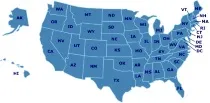
Homeschool Watch is an email list where articles, incidents, and current legislation impacting homeschoolers can be posted and practically discussed. The list purpose is to efficiently inform, network and support the efforts of homeschoolers across the nation to keep homeschooling free. This is intended to be a list for homeschoolers actively working on legislative issues and not a theoretical debate society.
The Time4Learning preschool program combines technology, animated characters, original stories and fun music to inspire a love of learning in the littlest e-learners. Ed Mouse and his friends guide children through more than forty topics such as numbers, letters, rhymes, self, time, music and colors.
The National Endowment for the Arts and the Poetry Foundation have partnered with U.S. state arts agencies to support Poetry Out Loud, a contest that encourages the nation's youth to learn about great poetry through memorization and recitation. This program helps students master public speaking skills, build self-confidence, and learn about their literary heritage.
HomeschoolMath.net is a comprehensive math resource site for homeschooling parents and teachers: find free worksheets, math ebooks for elementary grades, an extensive link list of games, a homeschool math curriculum guide, interactive tutorials & quizzes, and teaching tips articles. The resources emphasize understanding of concepts instead of just mechanical memorization of rules.
The National Collegiate Athletic Association (NCAA) is a voluntary organization through which the nation's colleges and universities govern their athletics programs. If you want to play NCAA sports at a Division I or II school, you need to register with the NCAA Eligibility Center if you were home schooled for any part of high school. If you are planning to attend a Division III school, you do not need to register with the NCAA Eligibility Center.
"Can anyone recommend a curriculum for pre-K and kindergarten? This is a frequent question homeschooling bulletin boards and email lists. It's a perfectly reasonable question, but some of the responses can be confusing to new homeschoolers. We all come into homeschooling with some common preconceptions of what the program should be - but many who have been at it for a while or raised homeschool grads are likely to strongly suggest not setting up a structured study program for young children. This is where some misunderstanding can come into play. Saying that a structured study program for a young child is inappropriate is not at all the same as saying that learning is unimportant during the early years. It's simply that many experienced homeschoolers and other educators feel there are certain kinds of activities that are much more important and appropriate in early childhood than studying the 3 R's - and that to establish a structure that emphasizes the 3 R's at that age can actually be detrimental. If a child is asking to learn to read, of course, that's a whole different matter - but it's simply a question of helping that child learn to read, which is very different thing from setting up a curriculum.
Founded in 1999 by William J. Bennett, along with other leaders, K12 offers a traditional program of learning using online technology and traditional content. Many states are offering the K12 program through Virtual Acadamies, with programs that are free of charge to participating families.